
India’s demographic dividend nearing its peak, working-age population share to decline after 2030
As per the report, out of 63 million (6.3 crore) graduates in the age group of 20 to 29 years as of 2023, around 11 million (1.1 crore) were unemployed.

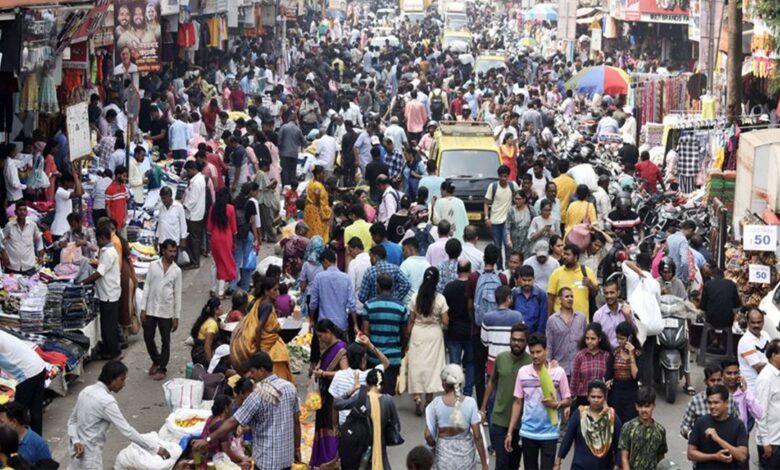
India’s demographic dividend is nearing its peak as the country’s working-age population share will begin declining after 2030, according to ‘State of Working India’ report released by Azim Premji University.
“The pace of job creation in the coming decades is critical to ensure that the demographic dividend translates into an economic one,” the report said.
The report further noted that nearly half of the unemployed in the age group of 15-29 years are graduates as expansion in the country’s higher education institutions has not been matched by the commensurate growth in employment opportunities.
As per the report, out of 63 million (6.3 crore) graduates in the age group of 20 to 29 years as of 2023, around 11 million (1.1 crore) were unemployed.
“The problem of graduate unemployment has been magnified in recent years owing to the growing size of the graduate population. In the last few decades, the youth population has grown substantially. So has the tertiary enrollment rate resulting in an increase in the absolute number of young graduates,” the report said.
Between 2004-05 and 2023, while approximately 5 million graduates were added each year, only around 2.8 million found employment, and an even smaller share entered salaried employment, contributing to rising graduate unemployment and slowing earnings growth, it said.
The report further noted that only a small share of youth secure stable salaried jobs within a year of graduation.
Around 40% of graduates in the labour force report open unemployment. However, this is not a new phenomenon – between 1983 and 2023, graduate unemployment rates have remained more or less unchanged between 35 and 40%
“The report traces the journey of a young worker – from education to job search and employment, and how this transition has evolved over the last forty years,” said Rosa Abraham, lead author of the report and Associate Professor of Economics at Azim Premji University.
The report underlined that India’s demographic dividend is nearing its peak as the country’s working-age population share will begin declining after 2030, “The pace of job creation in the coming decades is critical to ensure that the demographic dividend translates into an economic one,” the report said.
The expansion of higher education institutions have played a significant role in the surge in the number of graduates in the country. College availability in India increased from 29 per lakh youth in 2010 to 45 per lakh youth in 2021, mainly driven by private institutions.
The report underlined that India has made substantial progress in expanding access to higher education for its young (15- to 29-year-olds) population, ensuring a movement out of agriculture into industry and services, and reduced gender and caste-based disparities.
“More young people today are educated, informed, and ambitious than ever before. These are real achievements of which we can be proud,” said Indu Prasad, President, Azim Premji Universities.
The report draws on official databases going back four decades to see how youth participation in education and employment has changed, how well we have been able to use this demographic dividend, and the challenges and opportunities that arise in integrating them into the workforce.