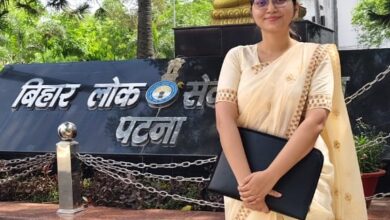
70th BPSC Success Story | Discipline and steady improvement key for success in civil services, says Prachi Priya
Prachi Priya has secured 56th rank in the 70th Bihar Public Service Commission (BPSC) examination. She has been selected as SDM. In a chat with BiharConnect, Ms Priya shares her experience and strategy for the success in the Civil Services examination.

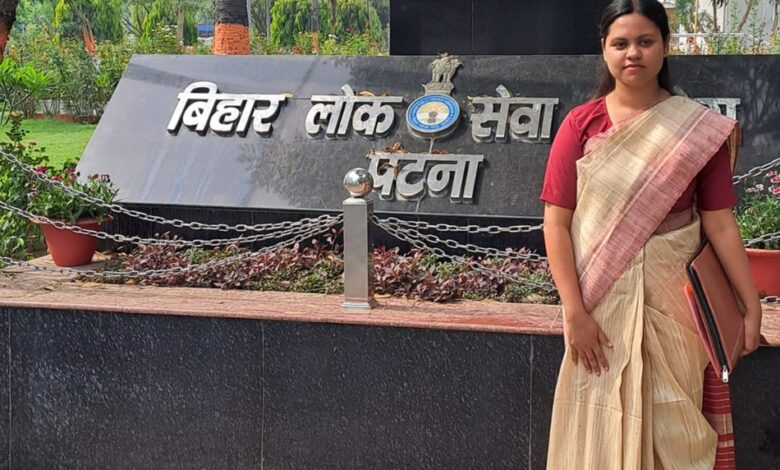
From missing the BPSC Mains cut-off by just nine marks to securing 56th rank in the 70th Bihar Public Service Commission (BPSC) Examination, Prachi Priya‘s journey is a story of perseverance, discipline and continuous improvement. Her success has earned her selection as a Sub-Divisional Magistrate (SDM). In this exclusive conversation with BiharConnect, Prachi Priya reflects on her preparation strategy, the challenges she faced, lessons from her UPSC journey, and the mindset that helped her achieve success. She also shares practical advice for preparation of Civil Services examinations.
Please tell us about your hometown, family background, and educational journey.
I am from Ranchi in Jharkhand. My father is a Police Inspector and my mother is a homemaker. Growing up in a family that valued discipline and public service shaped my outlook from an early age. My younger brother graduated from IIT Guwahati.
I studied at St. Francis School, Harmu, until Class 6 before completing my schooling at D.A.V. Public School, Hehal, Ranchi. Later, I graduated with Honours in Geography from St. Xavier’s College, Ranchi. My academic background in Geography eventually became an advantage during my Civil Services preparation.
When did you decide to prepare for the Civil Services?
The idea came quite naturally because of my father’s profession. Watching him work in the police department gave me an understanding of how public administration influences people’s lives. I realised that the Civil Services offer an opportunity to work directly with people and contribute to governance at the grassroots level.
I made up my mind while I was still in school and began preparing seriously soon after completing Class 12. This was your second BPSC attempt.
How did your first attempt shape your preparation?
My first attempt was the 69th BPSC examination, and I missed qualifying for the Mains by just nine marks. It was disappointing, but it also forced me to analyse where I had gone wrong.
By then, I had already been preparing for UPSC, so I had a reasonable conceptual foundation. What I needed was a better strategy, better guidance and more focused revision. Looking back, that unsuccessful attempt helped me prepare much more effectively for the next examination.
What was your approach to the Preliminary examination?
I tried to keep my sources limited and focus on revision instead of collecting more books. I relied on NCERT textbooks, Spectrum for Modern History, M. Laxmikanth for Polity, Lucent for Science and standard Bihar-specific material. For current affairs, I followed monthly magazines and annual compilations.
Equally important was solving previous-year question papers. They helped me understand the nature of the examination and identify recurring themes. I also joined a test series and followed a structured revision schedule over the last hundred days before the examination. Revising the same material multiple times gave me far more confidence than reading new sources.
How different was your preparation for the Mains?
The Mains examination required a completely different mindset because knowledge alone is not enough; it has to be presented within a limited time.
I joined a crash course and multiple Mains test series, but the most important part of my preparation was daily answer writing. I spent several hours every day writing answers, evaluating them and improving their structure. Since Geography was my optional subject, I revised my UPSC notes extensively. Continuous writing practice gradually improved both my speed and my confidence.
How did you prepare for the interview stage?
The interview is not just about knowledge; it is also about personality and clarity of thought. I attended interview guidance programmes and appeared for several mock interviews, each of which helped me identify areas for improvement.
I realised that the board is looking beyond factual knowledge. They observe how calmly you respond, whether your opinions are balanced, whether you can analyse situations logically and whether you communicate with confidence and humility.
You also prepared for UPSC. How did that journey help you?
I started preparing for UPSC in 2021, and although I could not clear the Preliminary examination in three attempts, the experience taught me invaluable lessons.
Those failures made me more disciplined. I learnt the importance of analysing mistakes instead of repeating them. I solved more previous-year questions, wrote more mock tests and continuously refined my preparation strategy. In many ways, my success in BPSC is the cumulative result of everything I learnt during my UPSC journey.
Civil Services preparation can be emotionally demanding. Did you ever struggle to stay motivated?
Yes, there were phases when the journey became emotionally exhausting. Competitive examinations involve uncertainty, and setbacks can affect your confidence.
What kept me going was the support of my family. They always reminded me that one result does not define a person’s ability. My friends also encouraged me throughout the preparation and often suggested useful study resources. Their support helped me remain focused whenever I felt discouraged.
Looking back, what made the biggest difference to your success?
If I had to identify one factor, it would be discipline. Motivation comes and goes, but discipline ensures that you continue working every day regardless of your mood or circumstances.
Consistency, proper guidance and the support of my family also played an equally important role. Together, they helped me overcome setbacks and steadily improve my preparation.
What advice would you give to BPSC aspirants?
My advice is to understand the examination before beginning preparation. Study according to the syllabus, analyse previous-year questions carefully and avoid collecting too many study materials.
Regular answer writing, mock tests and revision are essential. Aspirants should also prepare for the interview from the beginning by developing communication skills, confidence and a balanced personality instead of treating it as the final stage of preparation.
As a future administrator, what issues in Bihar would you like to work on?
Bihar has made progress in many areas, but challenges remain in literacy, healthcare, infrastructure and disaster management. These sectors require sustained administrative attention and effective implementation of government programmes.
As an SDM, I would particularly like to work towards making government offices more accessible and women-friendly while ensuring that welfare schemes reach the people they are intended to benefit. I believe responsive and transparent administration can significantly improve citizens’ trust in governance.