
From cost advantage to capability advantage: India’s GCCs in the age of AI
India has become the second-largest base of enterprise AI talent in the world. The intellectual property created in these centres is real. The patents are filed here. The products are shipped from here. Global roles are increasingly held by people sitting here — and the number of senior leadership roles based in India is projected to grow perhaps fivefold by 2030.

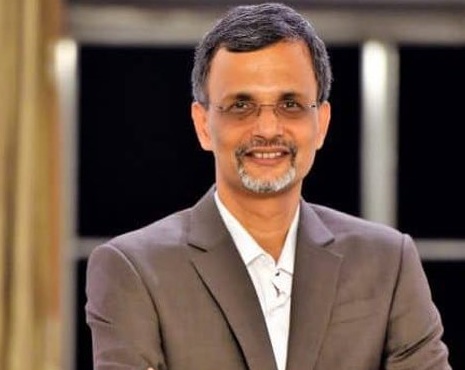
By V. Anantha Nageswaran
India’s Global Capability Centres are one of the quiet successes of our economy. They did not arrive with fanfare. There was no single big announcement. They grew slowly, one centre at a time, one team at a time. And today they are impossible to ignore.
The numbers tell the story. Two decades ago, we had a handful of captive back-offices. Today India hosts more than 1,800 such centres. By some recent industry counts, the number has already crossed 2,100. They employ close to two million professionals. On newer estimates, that figure is moving towards 2.3 million.
Their revenue has crossed 64 billion dollars, and it is climbing towards 100 billion. They now contribute close to two percent of our GDP. They take up a large share of the new office space built in our cities each year. And on the latest counts India now hosts around half of the world’s GCCs. No other country comes close.
This did not happen by accident. It happened because of our people. So let me say a word about talent, because that is the heart of the matter.
These centres first came to India for cost. They stayed for capability. That is an important difference. A cost advantage can be copied by the next low-cost country. A capability advantage is harder to build, and harder to lose. Over two decades, our engineers, analysts, designers and researchers earned the trust of global boards. They did not simply take instructions. They took ownership. And so the work moved up. What began as support became engineering. What began as engineering became product. What began as a back-office became, in many firms, the place where global decisions are now made.
The benefit has flowed both ways. This is important to state clearly. Global firms got world-class work at a fair price. Indian professionals got careers they could not have imagined a generation ago. GCC roles today often pay more than traditional services jobs. They demand deeper skills. They keep talent in India that might once have gone abroad. They have opened good jobs to more women, and to more cities. This is a genuine win-win. We do not need to be shy about saying so.
Now let me turn to a question I am often asked. Is the work in these centres really cutting-edge? Or is it still, at heart, low-cost support dressed up in new language?
The honest answer is that it is cutting-edge, and increasingly so. Look at what actually happens inside these centres. Global banks run their risk systems and trading platforms from Mumbai and Bengaluru. Carmakers design vehicles and embedded systems from Chennai and Pune. Semiconductor firms carry out chip design here. Pharmaceutical companies run clinical analytics here. Consumer firms build and own entire digital products here.
Recently, the German science and technology company Merck opened an integrated campus in Bengaluru that brings some three thousand three hundred people together across data, artificial intelligence and enterprise technology — and it now holds that company’s single largest concentration of digital capability anywhere in the world. India has become Merck’s fourth-largest workforce hub, behind only Germany, the United States and China. And more than 1,200 of these centres now do serious work in artificial intelligence and machine learning.
That last point deserves emphasis. India has become the second-largest base of enterprise AI talent in the world. The intellectual property created in these centres is real. The patents are filed here. The products are shipped from here. Global roles are increasingly held by people sitting here — and the number of senior leadership roles based in India is projected to grow perhaps fivefold by 2030. This is no longer the edge of the global economy. In many firms, it has become the core.
This brings me to the question that I suspect many of you are asking, perhaps quietly. If artificial intelligence can now write code, analyse data and draft documents, are these centres at risk? Will the machine replace the Indian professional? Is the whole model about to be automated away?
I want to answer this directly, because it deserves a direct answer, not a comforting one.
Part of the old model is indeed exposed. The work that was routine, repetitive and rule-bound is exactly the work that AI does most easily and most cheaply. If a centre’s value rests only on doing simple tasks at low cost, then that value is under real threat. We should not pretend otherwise. To pretend otherwise would be to fail the very people we are trying to protect.
But that is not where India’s centres mainly are today. And it is certainly not where they are heading.
Here is the more important truth. Artificial intelligence does not build, deploy or govern itself. Someone has to design these systems. Someone has to train them, test them, correct them, and hold them to account. Someone has to decide where they should be used, and where they must not be. Someone has to carry the responsibility when they fail. That work is expanding, not shrinking. And a large and growing share of it is being done in India. AI does not empty these centres. In the centres that are run well, it raises the value of each person who works there.
So the risk is real, but it is not destiny. The centres that stand still will suffer. The centres that move up will thrive. And our task — industry and government, together — is to make sure that India stays on the right side of that line.
Let me put the point more generally, because I believe it applies far beyond these centres. Resilience is not something a society is handed. It is something a society builds. A country that treats a powerful technology as fate will be shaped by it. A country that treats it as a tool will shape it instead. India must be firmly in the second group. Not passive recipients of what the technology does to us, but active authors of what we do with it.
Which brings me, at last, to the theme of this session. Industry and government collaboration.
Let me be honest about what government has done, and equally honest about what government cannot do.
Government has been listening. This year’s Budget took a clear step on tax certainty for these centres. The transfer-pricing safe harbour has been simplified and widened. The margin is now uniform. The threshold has been raised sharply. Approvals will be faster and more predictable, over a multi-year horizon. This was a long-standing request from industry, and it has now been addressed. We have also launched a national framework to carry these centres beyond the six large cities, into tier-two and tier-three India. That is not only an economic goal. It is also a matter of fairness. The opportunity should not sit in a few metros alone.
But let me be candid about the limits of what government can do.
Government can build the runway. It cannot fly the plane. The move from cost to capability, from execution to innovation, has to be made by firms and by people. Skilling is the clearest case. We produce a very large number of graduates each year. We do not yet produce enough who are ready on day one — by some estimates, fewer than half of them are ready for the job on the day they arrive. Closing that gap needs universities, industry and government working together — not one after another, but at the same time. This is where collaboration stops being a slogan and starts being real work.
And now I want to add one caution. It is, after all, part of my job to add cautions.
Success can breed complacency. The advantage we hold today was built. It can also erode. Other countries are watching us and copying us. Our costs are rising. In some skills, our talent is already scarce. So indispensability is not a title we can hold forever. It is a position we have to earn, and then earn again. The moment we believe we have arrived is the moment others begin to catch up.
So let us not celebrate too early. Let us treat this success not as a finish line, but as a foundation.
Let me close with one thought.
The value of these centres does not lie in the machines they use. It lies in the judgment of the people who run them. As our tools grow more powerful, that judgment becomes more important, not less. Our goal should never be to make our people work like machines. Our goal should be to use machines so that our people are freed to do more of what only people can do — to reason, to decide, to take responsibility, to exercise wisdom.
If we keep the human being at the centre, these centres will do more than survive the age of artificial intelligence. They will help to shape it. And India will be the better for it.
(V. Anantha Nageswaran is Chief Economic Adviser to the Government of India. Excerpted from his address at CII GCC Business Summit 2026.)