‘Keep working consistently, your time will come’: BPSC Rank 43 Ritika Jha on balancing an MNC job and cracking civil services exam
In this conversation with BiharConnect, Ritika speaks about balancing work and preparation, overcoming setbacks after narrowly missing the cut in her first attempt, her preparation strategy, and the lessons she believes every civil services aspirant should learn.

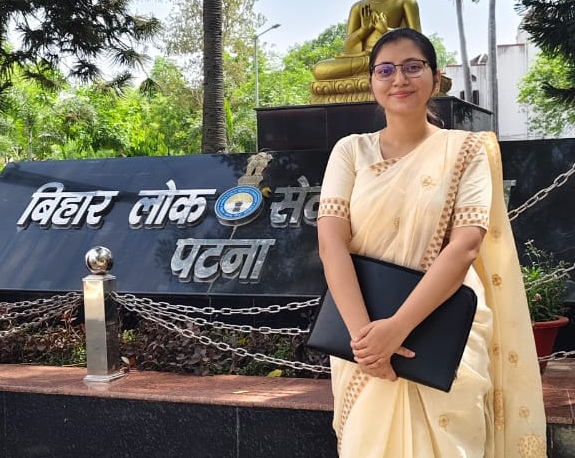
Working a full-time corporate job while preparing for one of Bihar’s toughest competitive examinations is no easy task. Yet, Ritika Jha, an Electronics and Communication Engineering graduate, managed to do exactly that. Securing Rank 43 in the 70th Bihar Public Service Commission (BPSC) examination, she has been selected as a Sub-Divisional Magistrate (SDM). In this conversation with BiharConnect, Ritika speaks about balancing work and preparation, overcoming setbacks after narrowly missing the cut in her first attempt, her preparation strategy, and the lessons she believes every civil services aspirant should learn. Edited excerpts:
Q. Tell us about yourself—your hometown, family background, and educational journey.
Ritika Jha: I am from Darbhanga. My father is a home tutor, while my mother is a homemaker. I completed my schooling and higher education in Delhi and graduated with a B.Tech in Electronics and Communication Engineering in 2022.
Q. What inspired you to pursue a career in the civil services?
Ritika Jha: The inspiration comes from my family and the values I grew up with. My great-grandfather served in the Bihar Education Service. Listening to my father speak about his dedication to public welfare motivated me to return to Bihar and contribute to the development of my home state through public service.
Q. This was your second attempt. What were the biggest challenges you faced during your preparation?
Ritika Jha: Yes, this was my second attempt. In the 69th BPSC examination, I narrowly missed qualifying for the Mains by a few marks. The biggest challenge throughout my preparation was managing time because I was working in an MNC alongside my studies. Balancing professional responsibilities with preparation required careful planning and discipline.
Q. How did you prepare for the Preliminary Examination? What was your strategy for current affairs, revision, and mock tests?
Ritika Jha: My strategy for the Preliminary Examination was simple—I kept my resources limited and revised them repeatedly. For current affairs, I regularly followed newspapers and one monthly current affairs magazine. I also enrolled in a coaching institute’s test series, which helped me assess my preparation and improve through regular practice.
Q. How did your preparation strategy change for the Mains Examination?
Ritika Jha: The Mains Examination requires a completely different approach. Answer writing and speed become extremely important. I focused extensively on previous years’ question papers and joined an offline test series to improve my writing skills. My optional subject was Geography, so I relied primarily on NCERT textbooks and previous years’ questions.
Q. How did you prepare for the Personality Test? What do you think the interview board expects from a candidate?
Ritika Jha: Mock interviews played the most important role in my preparation. They helped me identify my strengths as well as the areas where I needed improvement. After every mock, I worked on my shortcomings. I believe the interview board looks for honesty, clarity of thought, confidence, and a balanced personality rather than rehearsed answers.
Q. Looking back, what were the key factors behind your success?
Ritika Jha: Self-belief was the foundation of my journey. I always believed that I would achieve my goal, even if it took time. My parents were my biggest support system throughout the process. I was also fortunate to have supportive colleagues who helped me by accommodating leave whenever needed. Above all, consistency and discipline made the biggest difference.
Q. Preparing for competitive examinations can be emotionally exhausting. How did you deal with self-doubt and stay motivated?
Ritika Jha: There were times when I questioned whether this journey was meant for me. Balancing office work with preparation, along with societal pressure, was not easy. During those phases, my parents constantly encouraged me to keep going. Their support helped me overcome self-doubt and remain focused on my goal.
Q. What is the biggest lesson your BPSC journey has taught you?
Ritika Jha: The biggest lesson is that this can be a long journey, so one should be mentally prepared for both success and setbacks. With complete dedication, discipline, and patience, no goal is impossible to achieve.
Q. What advice would you give to aspirants, especially those who have faced repeated failures?
Ritika Jha: My advice is simple—never give up on your goal. Keep working consistently and trust the process. Your time will come.
Q. As a future administrator, what do you see as Bihar’s biggest challenges? Which sectors would you like to focus on?
Ritika Jha: Whatever responsibility is entrusted to me, I will discharge it with complete dedication. If I have the opportunity, I would particularly like to work in the areas of education and healthcare because both sectors have a direct impact on people’s quality of life.
Q. What does becoming a civil servant mean to you personally? What kind of administrator do you aspire to be?
Ritika Jha: Becoming a civil servant is a matter of great responsibility. I aspire to be an administrator who puts people first, listens to their concerns, and works with empathy and innovation to solve their problems.
Q. If you had to sum up your journey from aspirant to successful candidate in one sentence, what would it be?
Ritika Jha: I would like to end with a couplet that kept me motivated throughout my preparation:
दिल ना-उमीद तो नहीं, नाकाम ही तो है,
लम्बी है ग़म की शाम, मगर शाम ही तो है।