Nitish Kumar set to resign as CM; files nomination for Rajya Sabha
Union Home Minister Amit Shah accompanied Bihar CM during the filing of his nomination papers

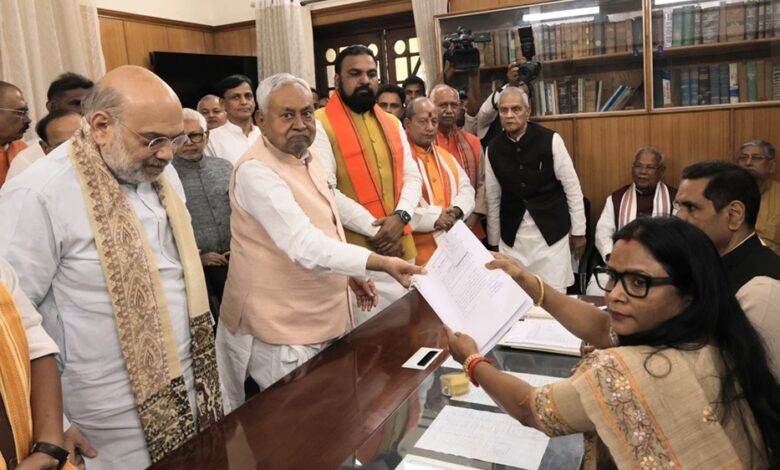
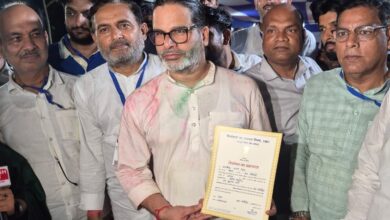
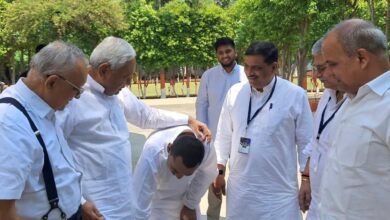
Putting speculations to rest, Bihar Chief Minister Nitish Kumar has confirmed that he will be resigning from the post he has held for over two decades. He filed his nomination for the upcoming Rajya Sabha elections, which signals that a big shift in Bihar’s politics is beginning.
Union Home Minister Amit Shah accompanied Bihar CM during the filing of his nomination papers.
In a social media post on X, Nitish said he had long harboured a desire to become a member of both Houses of the Bihar Legislative Assembly as well as both Houses of Parliament.
“From the very beginning of my parliamentary journey, there has been a desire in my heart to become a member of both Houses of the Bihar Legislature as well as both Houses of Parliament. In keeping with this aspiration, I seek to become a member of the Rajya Sabha in the elections being held this time,” the veteran politician said in a post on X.
The 75-year-old leader, who took oath as the chief minister of Bihar for a record 10th time in November last year, expressed gratitude to the people of the state for “consistently” placing their trust in him.
“For more than two decades, you have consistently placed your trust and support in me, and it is on the strength of that trust that we have served Bihar and all of you with complete dedication. It was the power of your trust and support that has enabled Bihar today to present a new dimension of development and dignity,” Kumar wrote.
The JD(U) supremo also promised full cooperation and guidance for the new government while stressing that he would continue his relationship with the people of the state.
“I want to assure you with complete honesty that my relationship with you will continue in the future as well, and my resolve to work together with you to build a developed Bihar will remain steadfast. The new government that will be formed will have my full cooperation and guidance,” he said.
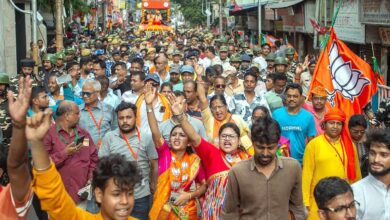
Meanwhile, protests erupted against Kumar’s decision to move to the Rajya Sabha, with distressed JD(U) workers, especially those from the CM’s native Nalanda district, gathering outside his official residence at Anne Marg.
JD(U) workers protest
The JD(U) workers alleged a conspiracy behind Nitish Kumar moving to Rajya Sabha, claiming that it was the idea of the the “liquor mafia and some party leaders.”
Breaking down in tears during the protest, JD (U) leader Rajiv Ranjan Patel said “no one other than Nitish Kumar is acceptable” as the CM.
Another JD (U) worker said that the people of Bihar had given their mandate to Nitish Kumar, expecting his leadership for the 2025-30 term.
“We want Nitish Kumar as the Chief Minister at all costs. The people of Bihar and the workers of Bihar have given Nitish Kumar a mandate for the 2025-30 term, with their blood and sweat… not to leave midway… We do not want the reins of Bihar to fall into someone else’s hands,” he said.
“Holi was not celebrated at anyone’s home (after the news spread). Neither the JD (U) nor the people of Bihar celebrated Holi. Our Holi was ruined,” he added.
Female party workers also demanded Kumar to continue as the CM noting that the women of the state had voted for him in large numbers.
Betrayal of people’s mandate, says opposition
RJD leader Tejashwi Yadav on Thursday said Bihar Chief Minister Nitish Kumar’s decision to enter the Rajya Sabha was a “betrayal” of the people’s mandate.
Yadav, the leader of the opposition in the state assembly, alleged the BJP has always been opposed to Dalits and OBCs, and with Kumar leaving the CM’s post, it will seek to implement its agenda in the socialist stronghold.
“The BJP has done a Maharashtra in Bihar,” he said.
“We have been saying from the very beginning that the BJP will not let Nitish Kumar remain the chief minister after the elections. This is exactly what has happened. This development is against the mandate of the people and amounts to a betrayal of it,” he said.
Alleging that the BJP had “hijacked” Kumar, Yadav said that was the reason the veteran leader was now moving to the Rajya Sabha.
“BJP is against OBCs and Dalits. They never want a leader from these communities to occupy the top post. They want a chief minister who will function like a rubber stamp for the top BJP leadership,” he alleged.
“I had said — ‘Nitish ji ko ghoda toh chadhaya hai dulha banake, lekin phera kisi aur ke saath dila raha hai’ (They made Nitish Kumar mount the horse like a groom, but are getting someone else to take the wedding vows),” he added.
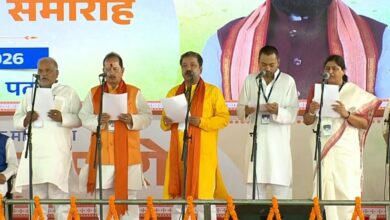
Kumar, the state’s longest-serving chief minister, filed nomination papers for the Rajya Sabha polls, paving the way for the first BJP-led government in the state.
Reacting to the development, Congress called it a “coup” and a “huge betrayal of the mandate of the people.”
“What the Indian National Congress was repeatedly saying during the Bihar election campaign has now been proven true. Under a conspiracy hatched by G2, a coup has been carried out in Bihar to seize power. In many ways, this is a major betrayal of the people’s mandate,” Congress leader Jairam Ramesh said in a post on X.