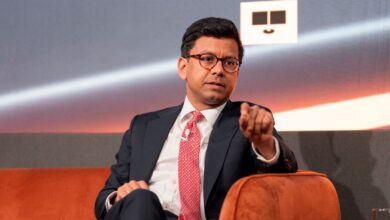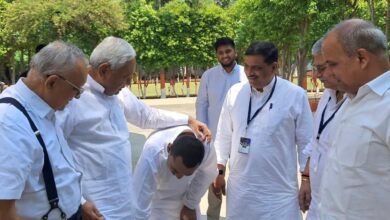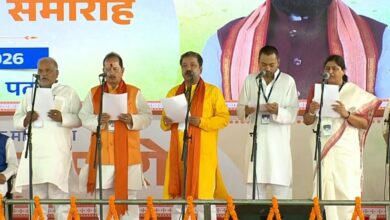

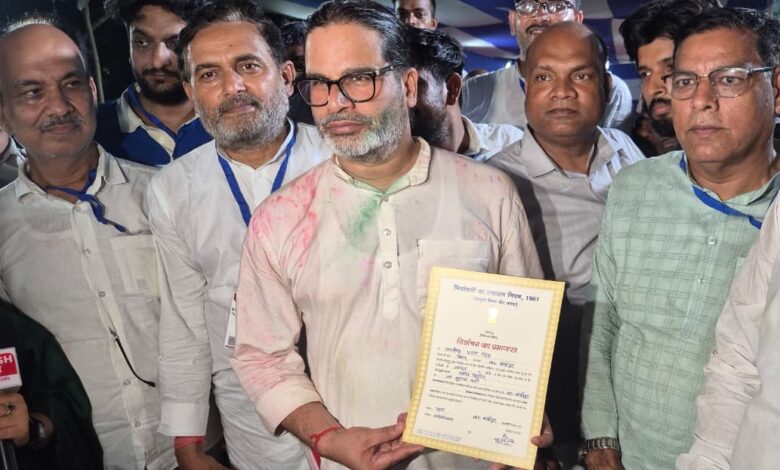
For more than a decade, Prashant Kishore occupied a unique position in Indian politics. As the strategist behind some of the country’s most consequential election campaigns, he shaped political narratives, deciphered voter sentiment and helped leaders win power—all while staying outside the electoral arena himself. Long before he contested an election, his name had become a political brand in its own right. That long-standing paradox came to an end in Bankipur, where Kishore finally stepped from the backroom to the ballot.
By winning the Bankipur Assembly byelection in Patna, Kishor has delivered the first electoral victory of his own political career and the first-ever legislative seat for his Jan Suraaj Party (JSP). The symbolism is impossible to miss because Bankipur was not just another constituency. It was a BJP bastion represented for years by BJP national president Nitin Nabin and his family. Kishor’s victory over the ruling party in the capital city of a BJP-ruled state has given him something that all his celebrated campaign victories never could — a democratic legitimacy of his own. The strategist who once helped others write their success stories has finally authored one for himself.
Public health professional
Long before television studios turned him into a political celebrity, Prashant Kishor was a public health professional. Trained in public health and associated with United Nations-linked health programmes, he spent years working on development and policy issues. Friends and former colleagues who encountered him during that phase often described him as data-driven, restless and unusually interested in governance.
That background mattered because it shaped the way he would later approach elections. Unlike traditional political operatives who emerged from party structures, Kishor entered politics through research, field surveys and behavioural analysis. He viewed voters not merely as caste blocs or ideological camps but as citizens responding to incentives, aspirations and administrative performance. When Indian politics began embracing professional campaign management, he was perfectly positioned to ride the wave.
Working with Modi
Kishor first entered the national spotlight during Narendra Modi’s prime ministerial campaign for the 2014 Lok Sabha election. Working through Citizens for Accountable Governance (CAG), he helped create a campaign machinery that was more sophisticated than anything Indian politics had previously seen. The famous “Chai Pe Charcha” outreach programme, extensive voter data analysis and highly targeted messaging became associated with a new style of campaigning. It was a moment when politics began borrowing heavily from marketing, technology and corporate management.
The BJP’s sweeping victory transformed Modi into a national phenomenon. It also transformed Kishor into the most sought-after election strategist in the country. Yet there was a contradiction embedded in that success. Kishor was becoming famous without having the favour of voters. He was acquiring influence without possessing a political base. His power depended entirely on his clients. That limitation would define the next stage of his career.
Political strategist
After parting ways with the BJP ecosystem, Kishor built the Indian Political Action Committee, or I-PAC, and reinvented himself as an election consultant. What followed was one of the most remarkable runs in contemporary Indian politics. He worked with Nitish Kumar in Bihar. He helped shape Amarinder Singh’s campaign in Punjab. He joined forces with the Trinamool Congress during Mamata Banerjee’s fierce battle against the BJP in West Bengal. He later advised parties across the ideological spectrum. Supporters saw proof of extraordinary political skill while critics saw a businessman selling campaign expertise to whichever party hired him.
Both assessments contained some truth. By the end of the 2010s, Kishor had become perhaps the only strategist who had worked with leaders as different as Narendra Modi, Nitish Kumar, Mamata Banerjee, Jagan Mohan Reddy and others. Few people in Indian politics had studied electoral behaviour across so many states from such close quarters. He accumulated knowledge, networks and credibility, but what he did not accumulate was a mass political constituency of his own.
Working with Nitish Kumar
The first serious attempt to cross from consultancy into politics came through Nitish Kumar. Kishor joined the Janata Dal (United) and was elevated rapidly within the party. For a brief period, it appeared he might evolve into a major organisational figure in Bihar politics. Instead, the experiment collapsed. Differences over his opposition to the CAA and other political disagreements led to a public rupture. Kishor’s expulsion from JD(U) was significant because it stripped away any illusion that he could simply inherit a political platform through proximity to established leaders.
The episode also revealed something about his personality. He was willing to challenge allies publicly, even at the cost of organisational comfort. That tendency would later become central to his political identity.
Bihar Politics
Despite operating nationally, Bihar remained Kishor’s central political project. He often argued that the state’s problems went beyond party politics. According to him, Bihar suffered from a deeper crisis of governance, education, employment and leadership. Whether one agreed with his diagnosis or not, he consistently returned to the same theme: Bihar needed political restructuring rather than periodic changes of government.
That conviction eventually led to the Jan Suraaj campaign. Beginning in 2022, Kishor embarked on an extensive padyatra across Bihar. Unlike the high-tech campaigns that had made him famous, this exercise was intensely physical and old-fashioned. He travelled through villages, interacted with residents and built a network outside traditional party structures.
For many observers, this was the most important phase of his transformation. The consultant who once analysed voters through spreadsheets in backrooms was now spending time among them.
Jan Suraaj
The Jan Suraaj movement eventually evolved into a political party. Unlike any other new party, expectations were enormous and media attention was constant. Kishor’s personal visibility was unmatched among emerging regional leaders. Then came the 2025 Bihar Assembly election, and the results were discouraging. Jan Suraaj failed to win a single seat. The party’s debut ended in disappointment while the NDA retained dominance. Kishor himself had chosen not to contest. Critics declared that political consultancy and electoral politics were entirely different skills. Many argued that Bihar’s entrenched caste arithmetic had exposed the limits of Kishor’s model. In retrospect, that defeat may have been necessary.
Political careers are often shaped less by victories than by the lessons drawn from failure. The 2025 election demonstrated that public visibility could not substitute for grassroots organisation. It also forced Jan Suraaj to become more grounded and less dependent on the aura surrounding its founder.
Political debut
The Bankipur byelection arrived under unusual circumstances. The seat became vacant after Nitin Nabin moved to the Rajya Sabha. For decades, the constituency had been associated with the BJP. In the previous assembly election, Jan Suraaj had been a distant third. Few constituencies better represented the challenge facing Kishor. This time, he decided to enter the arena himself.
The campaign was framed not merely as a constituency contest but as a referendum on whether Jan Suraaj deserved to be taken seriously as a political force. Kishor campaigned aggressively, presenting himself as an alternative to both the BJP and the RJD-led opposition. The result exceeded expectations. He defeated the BJP candidate by a substantial margin and captured a seat that had long been considered out of reach for a newcomer. The victory was large enough to be interpreted not as a fluke but as a genuine political breakthrough.
The significance of Bankipur lies in what it changes about Kishor’s identity. Until now, his reputation rested largely on his understanding of politics. After Bankipur, he possesses evidence that he can participate in politics as a candidate and win. India has seen many influential advisers. Very few have successfully converted advisory power into electoral power. Kishor has now crossed that bridge.
The victory also alters the internal dynamics of Jan Suraaj. Until now, the party’s appeal rested almost entirely on his promise of future relevance. Today, it has a legislative presence and a demonstrable success story. One seat does not make a movement, but one seat can make a movement believable.
However, it would be premature to treat Bankipur as proof that Bihar’s political order has been overturned. The state remains dominated by powerful parties with deep caste networks, experienced organisations and substantial resources. A bypoll victory, however dramatic, is not the same as success in a statewide election. Kishor also faces a challenge familiar to many charismatic founders. He must build a party that can survive beyond his personal appeal. The next test will be whether Jan Suraaj can produce leaders, candidates and local structures capable of winning independently.
Of course, the significance of this moment cannot be diminished. For years, Kishor occupied a strange space in Indian politics. He was too political to be merely a consultant and too detached from electoral politics to be considered a politician. Bankipur resolves that paradox.